
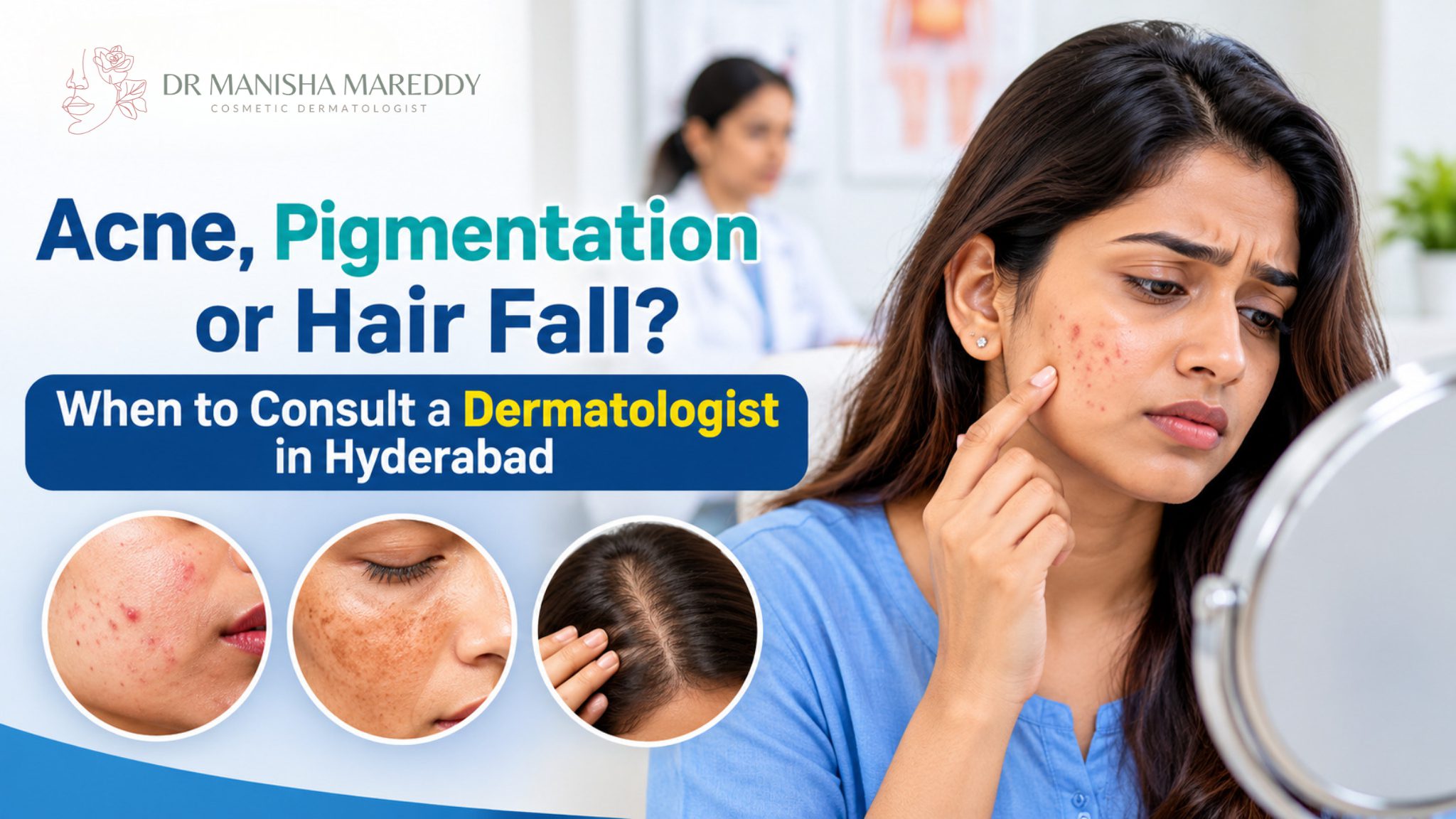
Acne, pigmentation, and hair fall are some of the most common concerns affecting people of different age groups. While occasional pimples, mild skin discoloration, and daily hair shedding may be normal, persistent or worsening problems can indicate underlying skin or scalp conditions that require medical attention.
Many people try home remedies, cosmetic products, hair oils, and over-the-counter creams before consulting a specialist. However, these solutions may not address the actual cause of the problem. In some cases, delaying treatment can lead to acne scars, stubborn pigmentation, or progressive hair thinning.
If you are experiencing recurring skin or hair concerns, consulting an experienced dermatologist in Hyderabad can help identify the underlying condition and determine the right treatment approach.
Dr. Manisha Mareddy, a cosmetic dermatologist, dermatosurgeon, and trichologist at Shlok Dermatology & Wellness, provides personalized dermatological care for acne, pigmentation, hair loss, and other skin and scalp concerns.
This guide explains when you should consult a dermatologist, the warning signs you should not ignore, and the treatment options available for common skin and hair problems.
1. Acne and Pimples: When Should You Visit a Dermatologist?
Acne is a common skin condition that develops when hair follicles become clogged with excess oil and dead skin cells. Bacteria, hormonal fluctuations, genetics, and certain medications can also contribute to breakouts.
Although occasional pimples may improve with basic skincare, persistent acne requires proper evaluation.
Signs That You Need Professional Acne Treatment
Consider consulting a dermatologist if you experience:
- Frequent breakouts that do not improve with regular skincare.
- Painful, inflamed pimples or cystic acne.
- Deep acne nodules beneath the skin.
- Repeated breakouts on the cheeks, forehead, chin, or jawline.
- Dark spots left behind after pimples heal.
- Acne scars or uneven skin texture.
- Acne associated with irregular periods or other hormonal symptoms.
Early treatment is important because severe or persistent acne can cause permanent scarring.
What Causes Persistent Acne?
Several factors can contribute to recurring acne:
Hormonal Changes: Fluctuations in androgen hormones can increase oil production and trigger breakouts.
Excess Sebum Production: Excess oil can combine with dead skin cells and block pores.
Bacterial Activity: The growth of acne-associated bacteria can contribute to inflammation.
Genetics: A family history of acne may increase the likelihood of developing persistent breakouts.
Lifestyle Factors: Stress, certain skincare products, and other individual triggers may worsen acne.
Acne Treatment Options in Hyderabad
Professional acne and pimple treatment in Hyderabad depends on the severity and type of acne.
Treatment options may include:
- Topical medications and prescription creams.
- Oral medications when clinically appropriate.
- Chemical peels for selected acne concerns.
- Comedone extraction for blackheads and whiteheads.
- Intralesional injections for selected painful inflammatory acne lesions.
- Customized skincare routines.
- Hormonal evaluation when indicated.
For people experiencing depressed acne scars, additional procedures such as microneedling radiofrequency, subcision, laser resurfacing, punch excision, and TCA CROSS may be recommended depending on scar type.
2. Pigmentation and Dark Spots: When Should You Seek Help?
Pigmentation occurs when melanin production or distribution changes, resulting in darker patches or uneven skin tone. It can develop due to sun exposure, hormonal changes, inflammation, skin injuries, and genetic factors.
Some pigmentation concerns fade naturally, while others may persist or become more noticeable without appropriate treatment.
Warning Signs That Require Dermatological Attention
You should consider consulting a dermatologist if you notice:
- Dark patches appearing on your cheeks or forehead.
- Persistent pigmentation around the mouth.
- Dark spots remaining after acne heals.
- Uneven skin tone despite regular skincare.
- Pigmentation that becomes darker after sun exposure.
- Brown or grey patches that gradually spread.
- Recurrent pigmentation despite using skincare products.
Any new or changing pigmented spot, especially one that changes shape, colour, or size, should be medically assessed rather than assumed to be ordinary pigmentation.
Common Types of Pigmentation
Melasma: A pigmentation condition that causes brown or greyish patches, commonly on the cheeks, forehead, and upper lip. Hormonal changes and sunlight are common triggers.
Post-Inflammatory Hyperpigmentation: Dark spots that develop after acne, eczema, irritation, or skin injuries.
Sunspots: Dark patches that develop due to prolonged ultraviolet exposure.
Freckles: Small brown spots that are often influenced by genetics and sunlight.
Perioral Pigmentation: Darkening around the mouth that may occur due to irritation, inflammation, or other contributing factors.
Pigmentation Treatment Options in Hyderabad
Professional pigmentation treatment in Hyderabad starts with identifying the type and depth of pigmentation.
Depending on the condition, treatment options may include:
- Chemical peels.
- Q-Switched Nd laser toning.
- Prescription topical creams.
- Medical-grade skincare products.
- Customized sun protection routines.
- Combination treatments for stubborn pigmentation.
For melasma, a dermatologist may recommend a combination of topical medications, chemical peels, selected laser procedures, and maintenance skincare.
You can also explore melasma treatment in Hyderabad for more information about managing persistent facial pigmentation.
3. Hair Fall and Hair Thinning: When Should You Consult a Dermatologist?
Hair fall is another common concern affecting both men and women. Losing approximately 50–100 hair strands daily can be part of the normal hair growth cycle. However, excessive shedding, visible thinning, or sudden hair loss may indicate an underlying condition.
Ignoring persistent hair fall can sometimes allow progressive hair loss to continue without appropriate treatment.
Warning Signs You Should Not Ignore
Consult a dermatologist if you experience:
- Excessive hair shedding for several weeks or months.
- Noticeable thinning around the crown or temples.
- A receding hairline.
- Widening of the central hair part.
- Sudden bald patches on the scalp.
- Persistent dandruff, itching, or scalp inflammation.
- Reduced hair density or a visibly thinner ponytail.
- Hair loss following an illness, major stress, or rapid weight loss.
Sudden patchy hair loss, especially when accompanied by scalp pain, redness, scaling, or inflammation, should be assessed promptly.
Common Causes of Hair Fall
Genetic Factors: Hereditary hair loss can cause gradual thinning in men and women.
Hormonal Imbalances: Thyroid disorders and other hormonal changes may contribute to excessive shedding.
Nutritional Deficiencies: Low iron levels, inadequate protein intake, and certain nutritional deficiencies can affect hair growth.
Stress and Illness: Physical or emotional stress, surgery, fever, and significant illness may trigger temporary hair shedding.
Scalp Conditions: Dandruff, inflammation, and certain infections can affect scalp health and contribute to hair problems.
Medications: Certain medications may cause hair shedding as a side effect.
Hair Fall Treatment Options in Hyderabad
Professional hair fall treatment in Hyderabad begins with identifying the reason behind hair loss.
Depending on the diagnosis, treatment options may include:
- Medical treatment for hereditary hair loss.
- PRP hair treatment.
- GFC hair treatment.
- Hair growth factor treatments.
- Medicated scalp treatments.
- Nutritional correction when deficiencies are identified.
- Hair transplant evaluation for suitable candidates.
A dermatologist may also recommend blood investigations when nutritional deficiencies, thyroid conditions, or hormonal factors are suspected.
PRP and GFC Hair Treatments
Platelet-Rich Plasma (PRP) and Growth Factor Concentrate (GFC) are procedures that use components derived from a patient’s own blood.
PRP Hair Treatment: Blood is collected and processed to concentrate platelets in plasma. The preparation is then injected into selected scalp areas. It may help some individuals with certain forms of hair thinning.
GFC Hair Treatment: This procedure uses a prepared concentrate containing growth factors derived from the patient’s blood. It is intended to support hair growth in selected cases.
Both treatments have limitations, and results vary between individuals. They should not replace appropriate medical treatment when an underlying condition requires it.
4. Skin and Hair Problems That Should Never Be Ignored
Some dermatological conditions require attention even if they initially appear minor.
Here are additional warning signs that indicate the need for professional evaluation.
Persistent Itching and Skin Rashes
Recurring itching, redness, scaling, and rashes may be associated with eczema, contact dermatitis, fungal infections, or allergic skin conditions.
If symptoms continue despite basic skincare or become increasingly uncomfortable, consult a dermatologist.
Acne That Leaves Permanent Marks
Repeated inflammation can damage deeper skin layers and result in permanent acne scars. Early treatment can help reduce the risk of scarring.
Sudden Hair Loss in Patches
Patchy hair loss may be associated with alopecia areata, scalp infections, or other conditions. Prompt evaluation helps identify the cause.
Pigmentation That Keeps Returning
Conditions such as melasma can recur due to sunlight, hormonal changes, and other triggers. Long-term management may be necessary.
Scalp Itching and Severe Dandruff
Persistent dandruff, redness, crusting, or scalp discomfort may require medicated treatment rather than frequent shampoo changes.
5. What Happens During a Dermatologist Consultation?
Many people postpone visiting a dermatologist because they are unsure about what happens during the appointment.
A dermatology consultation generally involves the following steps.
Step 1: Understanding Your Concerns
The dermatologist discusses your symptoms, how long you have experienced them, previous treatments, and any factors that may be contributing to the problem.
Step 2: Skin or Scalp Examination
The affected area is examined to understand the condition, severity, and possible underlying causes.
Step 3: Diagnostic Evaluation
Depending on your symptoms, the dermatologist may recommend additional investigations, such as blood tests or specialized skin and scalp examinations.
Step 4: Personalized Treatment Plan
A treatment plan is developed based on your diagnosis, skin or hair type, medical history, and individual requirements.
Step 5: Follow-Up and Maintenance
Follow-up consultations help assess your response to treatment and make adjustments when necessary.
6. Why Choose Dr. Manisha Mareddy for Skin and Hair Concerns in Hyderabad?
Choosing a qualified dermatologist is important when dealing with persistent acne, pigmentation, hair fall, and other dermatological conditions.
Dr. Manisha Mareddy is a cosmetic dermatologist, dermatosurgeon, and trichologist with MBBS and MD DVL qualifications. She has also completed specialized fellowship training in injectables and dermatologic laser surgery in Thailand.
At Shlok Dermatology & Wellness, she offers personalized treatment options for a range of skin and hair concerns.
Some of the services available include:
- Acne and pimple treatment.
- Acne scar treatment.
- Pigmentation and melasma treatment.
- Laser skin toning.
- Skin rejuvenation procedures.
- Hair fall and hair regrowth treatment.
- PRP and GFC hair treatments.
- Scalp and dandruff treatments.
- Anti-ageing dermatological procedures.
Whether you are looking for a skin specialist in Hyderabad or a dermatologist for persistent hair fall, professional consultation can help you understand the available treatment options.
7. Simple Tips to Maintain Healthy Skin and Hair
Along with professional treatment, maintaining healthy daily habits can support skin and scalp health.
Skincare Tips
- Cleanse your face using a gentle cleanser suitable for your skin type.
- Apply a moisturizer regularly.
- Use broad-spectrum sunscreen with SPF 30 or higher.
- Avoid picking or squeezing pimples.
- Avoid using multiple strong skincare ingredients without professional guidance.
- Choose non-comedogenic products if you have acne-prone skin.
Haircare Tips
- Use a suitable shampoo based on your scalp condition.
- Avoid excessive heat styling.
- Do not tie your hair too tightly.
- Maintain a balanced diet with adequate protein.
- Avoid unnecessary supplements without identifying deficiencies.
- Consult a dermatologist if hair shedding becomes persistent.
Healthy habits can support your treatment plan, but they cannot replace medical care when an underlying skin or hair condition is present.
Frequently Asked Questions (FAQs)
1. When should I consult a dermatologist for acne?
Consult a dermatologist if acne is persistent, painful, frequently recurring, or leaving dark spots and scars. Early treatment can help control breakouts and reduce the risk of permanent scarring.
2. Can pigmentation be treated completely?
Many types of pigmentation can improve with appropriate dermatological treatment. However, some conditions, particularly melasma, may recur. Maintenance skincare and sun protection are important.
3. How much hair fall is considered normal?
Losing approximately 50–100 hair strands daily is generally considered normal. However, sudden increases in shedding, visible thinning, or patchy hair loss should be evaluated by a dermatologist.
4. Which doctor should I consult for hair fall in Hyderabad?
A qualified dermatologist or trichologist can evaluate hair loss, identify the underlying cause, and recommend suitable treatment options.
5. Is PRP hair treatment effective for hair loss?
PRP may help improve hair density in selected patients with certain types of hair loss. Results vary, and multiple sessions may be required. A dermatologist should first determine whether you are a suitable candidate.
6. Can acne and pigmentation be treated together?
Yes. Depending on the condition, a dermatologist may create a treatment plan that addresses active acne and post-inflammatory pigmentation. Treating active acne is often an important first step in preventing further marks.
7. How do I know if my hair fall is caused by nutritional deficiencies?
Hair loss may sometimes be associated with low iron, inadequate protein intake, or other nutritional deficiencies. A dermatologist may recommend appropriate blood tests based on your symptoms and medical history.
8. How do I choose the best dermatologist in Hyderabad?
Look for a qualified dermatologist with relevant medical qualifications, experience in treating your particular concern, access to appropriate diagnostic and treatment options, and a focus on individualized patient care.
Conclusion
Acne, pigmentation, and hair fall are common concerns, but persistent symptoms should never be ignored. While basic skincare and haircare habits can help maintain overall health, recurring or worsening problems may require professional diagnosis and treatment.
If you are experiencing frequent acne breakouts, stubborn pigmentation, excessive hair shedding, or visible thinning, consulting an experienced dermatologist in Hyderabad can help you understand the underlying cause and explore suitable treatment options.
Dr. Manisha Mareddy at Shlok Dermatology & Wellness provides personalized dermatological care for skin and hair concerns, including acne, pigmentation, melasma, hair fall, and hair restoration.
Instead of relying on temporary solutions, take the first step towards healthier skin and hair by scheduling a professional dermatology consultation.
Book Your Consultation Today
Website: https://drmanishamareddydermatologist.com/
Clinic: Shlok Dermatology & Wellness, Kokapet, Hyderabad.
Contact: +91 9000235537 | +91 89779 25537