
Hair fall is a common concern that affects both men and women. Finding loose strands on your pillow, noticing more hair in the shower, or seeing your hairline recede can be worrying. While some daily hair shedding is normal, persistent hair fall, visible thinning, or sudden bald patches may indicate an underlying condition that needs medical attention.
If you are searching for hair fall treatment in Hyderabad, the first step is to understand why your hair is falling out. Hair loss may be associated with genetics, stress, hormonal changes, nutritional deficiencies, scalp conditions, certain medications, or recent illness. The right treatment depends on identifying the cause rather than simply using hair oils or switching shampoos.
Dr. Manisha Mareddy, a dermatologist and trichologist at Shlok Dermatology & Wellness in Hyderabad, offers hair and scalp services, including hair loss treatment, PRP hair treatment, scalp dandruff treatment, and hair growth factor treatment.
This guide explains the warning signs of hair loss, when to consult a dermatologist, and the treatment options that may help support healthier hair growth.
What Is Normal Hair Shedding?
Hair naturally moves through growth, transition, and resting phases. As part of this cycle, many people shed approximately 50–100 hairs a day. The amount can vary depending on hair length, washing frequency, and individual hair-growth patterns.
However, shedding may need evaluation if you notice:
- A sudden increase in the amount of hair falling out.
- A widening part or reduced hair density.
- A receding hairline or a thinning crown.
- Round or irregular bald patches.
- A ponytail that feels noticeably thinner.
- Persistent scalp itching, redness, scaling, or discomfort.
- Hair loss accompanied by changes in your eyebrows, eyelashes, or body hair.
These symptoms do not automatically mean permanent hair loss. A dermatologist can assess whether the problem is temporary shedding, hair breakage, hereditary hair loss, or another condition.
When Should You See a Dermatologist for Hair Fall?
1. Hair Fall Continues for Several Weeks or Months
Temporary shedding can occur after illness, significant stress, surgery, childbirth, or major changes in weight. In some cases, shedding becomes noticeable a few months after the triggering event.
If the shedding persists, worsens, or is accompanied by visible thinning, seek a professional assessment rather than waiting indefinitely.
A dermatologist can review your health history and determine whether the hair loss is likely to improve naturally or requires treatment.
2. You Notice a Receding Hairline or Widening Part
Gradual thinning around the temples, crown, or central part may be a sign of androgenetic alopecia, also called hereditary or pattern hair loss.
This condition can affect men and women. Early assessment matters because some treatments are more effective at slowing progression before substantial hair loss occurs.
If you notice these changes, consider consulting a hair loss specialist in Hyderabad to discuss diagnosis, treatment options, and realistic expectations.
3. Hair Falls Out Suddenly or in Patches
Sudden hair loss or distinct bald patches should not be ignored. One possible cause is alopecia areata, an immune-mediated condition that can affect the scalp and other hair-bearing areas. Other causes include scalp infections and inflammatory disorders.
Seek prompt medical evaluation if you develop:
- One or more new bald patches.
- Rapid or extensive hair shedding.
- Scalp pain, redness, swelling, or scaling.
- Broken hairs with a scaly or inflamed patch.
- Hair loss accompanied by other unexplained symptoms.
Early diagnosis can help identify conditions that need treatment to prevent further hair loss or scalp damage.
4. Hair Fall Occurs Alongside Scalp Problems
Dandruff, persistent itching, inflammation, and scalp infections can sometimes contribute to hair problems. Scratching and harsh treatments may also damage fragile hair.
If over-the-counter dandruff products do not help, or you develop significant redness, pain, crusting, or patchy hair loss, a dermatologist can assess the scalp and recommend appropriate treatment.
Explore scalp dandruff treatment to learn about the scalp-care services listed by Dr. Manisha Mareddy.
5. Hair Fall Starts After an Illness, Diet Change, or Medication
Hair shedding may occur after a high fever, significant illness, surgery, childbirth, rapid weight loss, or a period of inadequate nutrition. Certain medicines can also contribute.
Do not stop a prescribed medicine on your own. Tell your dermatologist when the shedding began, any recent health changes, and which medicines or supplements you take. Your doctor can help determine whether further investigations or a change in treatment is appropriate.
Common Causes of Hair Fall
Understanding the cause of hair loss is essential because different conditions require different treatments.
Hereditary Hair Loss
Hereditary hair loss is one of the most common causes of gradual thinning. In men, it may appear as a receding hairline or thinning at the crown. In women, it often causes reduced density or a widening part.
A dermatologist may recommend medication or other options depending on the pattern of hair loss, health history, and treatment goals.
Stress-Related Hair Shedding
Significant physical or emotional stress can trigger a condition called telogen effluvium, in which more hairs than usual enter the resting phase and shed. It may occur after illness, surgery, childbirth, or a major life event.
Hair growth may recover once the trigger resolves, although persistent shedding should be evaluated to check for additional causes.
Hormonal Changes
Hormonal changes and certain endocrine conditions can contribute to hair thinning. For example, some women with polycystic ovary syndrome (PCOS) experience hair loss alongside other symptoms.
A dermatologist may recommend further medical evaluation when the pattern of hair loss or associated symptoms suggest a hormonal cause.
Nutritional Deficiencies
Inadequate intake or low levels of certain nutrients, including iron or zinc, can contribute to hair loss in some people. Restrictive diets and rapid weight loss may also affect hair growth.
Nutritional supplements are not a universal solution. Testing and supplementation should be guided by clinical findings because excessive intake of some nutrients can be harmful.
Scalp Conditions
Inflammatory conditions, fungal infections, and other scalp disorders can cause itching, scaling, breakage, or hair loss. Identifying and treating the underlying condition is important before considering cosmetic hair-growth procedures.
How Is Hair Loss Diagnosed by a Dermatologist?
A consultation for hair fall treatment in Hyderabad should begin with an assessment of the cause, not an automatic recommendation for a procedure.
Your dermatologist may:
- Review your medical history: Discuss when the hair fall began, recent illness, stress, family history, diet, medications, and previous treatments.
- Examine your scalp and hair: Assess the pattern of thinning, hair density, inflammation, scaling, and signs of breakage.
- Perform a hair-pull test or scalp examination: These may help determine whether active shedding is occurring.
- Recommend investigations when necessary: Blood tests may be appropriate if a nutritional deficiency, thyroid condition, hormonal issue, or another medical cause is suspected.
- Develop an individual treatment plan: Recommendations depend on the diagnosis, the extent of hair loss, and whether the follicles are likely to respond to treatment.
A scalp biopsy or other specialized examination may be necessary in selected cases. Not everyone requires extensive testing.
Hair Fall Treatment Options in Hyderabad
Treatment depends on whether the problem involves temporary shedding, hereditary thinning, a scalp disorder, or another cause. A dermatologist may recommend one or more of the following options.
1. Medical Treatment for Hair Loss
Depending on the diagnosis, medication may help slow hair loss or support regrowth. Topical minoxidil is one option used for certain forms of hereditary hair loss. Other prescription medicines may be appropriate for selected patients.
The right medicine, dosage, and duration depend on the individual. Some treatments require ongoing use to maintain their benefits, and side effects must be considered.
Avoid starting prescription hair-loss medication or stopping existing treatment without professional advice.
2. PRP Hair Treatment
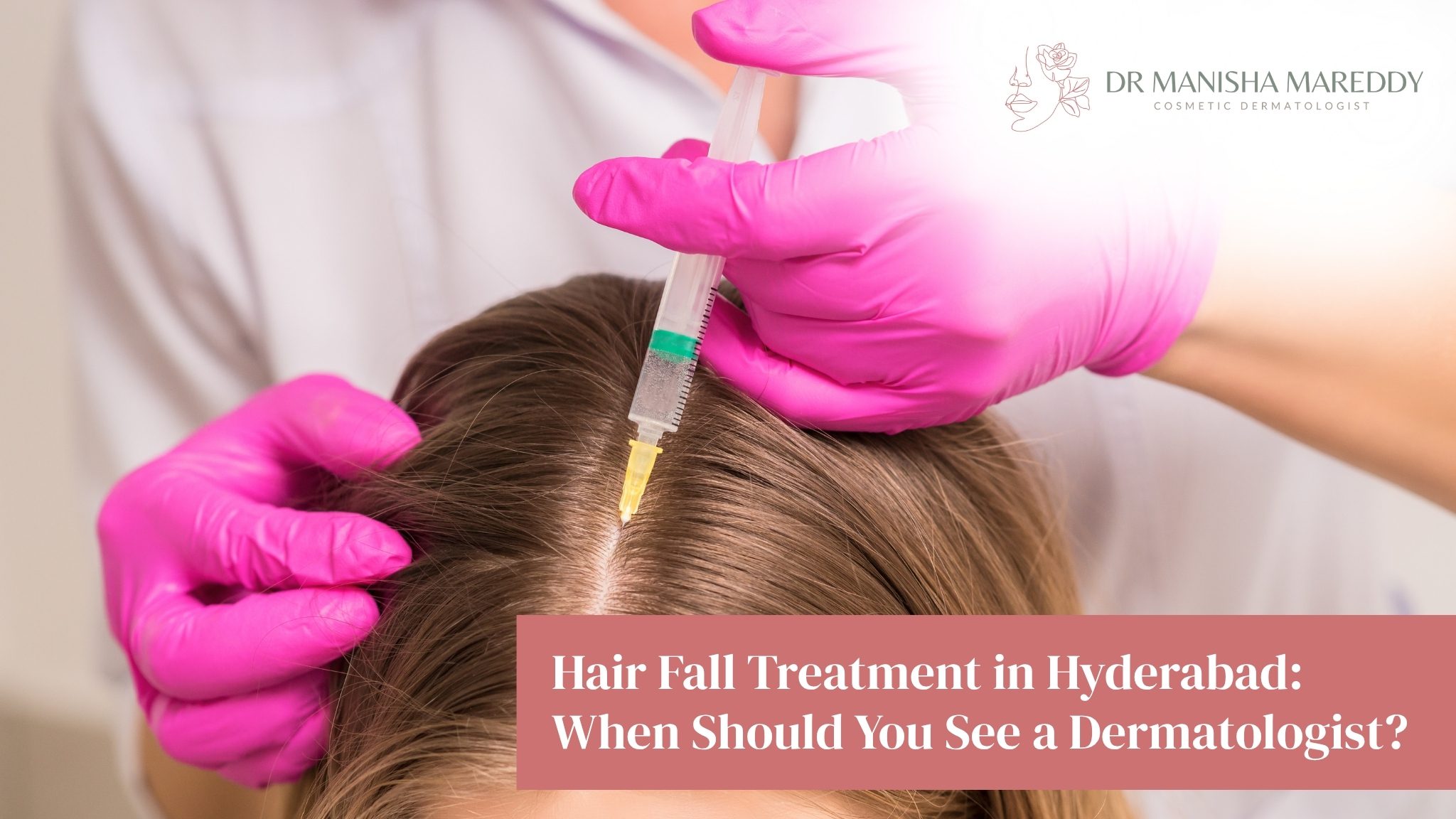
Platelet-rich plasma (PRP) treatment involves taking a small sample of blood, processing it to concentrate platelets in plasma, and injecting the prepared material into selected areas of the scalp.
PRP may help some people with certain forms of hair thinning, but outcomes vary and it is not suitable for every cause of hair loss. Multiple sessions may be needed, followed by maintenance treatment depending on the response.
People considering PRP hair treatment in Hyderabad should discuss the expected benefits, limitations, cost, and number of sessions with their dermatologist.
3. GFC Hair Treatment
Growth factor concentrate (GFC) is a hair treatment that uses a prepared concentrate derived from the patient’s blood. It is intended to support the scalp environment and hair growth in selected cases.
GFC and PRP are different preparation methods, and neither guarantees hair regrowth. The evidence, treatment protocols, and outcomes can vary.
Read about PRP vs GFC hair treatment in Hyderabad to understand the differences and discuss which approach, if any, may suit your condition.
4. Hair Growth Factor Treatment
Hair growth factor treatments may be offered as part of a hair restoration plan. The exact formulation, method, evidence, and expected outcomes depend on the treatment being used.
Before proceeding, ask the dermatologist what the treatment contains, how it is administered, what evidence supports its use for your condition, and whether established medical options may be more appropriate.
Explore the clinic’s hair regrowth services for information about the hair-related treatments it lists.
5. Treatment for Scalp Dandruff and Inflammation
When dandruff, dermatitis, or infection is contributing to scalp symptoms, treating the underlying condition is important. Depending on the diagnosis, a dermatologist may recommend medicated shampoos, topical medication, or other targeted treatments.
Treating a scalp condition may improve scalp health, but it will not necessarily reverse hereditary hair loss or every other cause of thinning.
6. Hair Transplant Evaluation
For selected people with established pattern hair loss, a hair transplant may be considered after a thorough assessment. Suitability depends on the cause of hair loss, the availability of donor hair, the pattern of thinning, and future progression.
A transplant does not treat every underlying cause of hair loss, and ongoing medical management may still be recommended.
Simple Ways to Support Healthy Hair
Daily habits can help reduce avoidable hair damage, although they cannot treat every medical cause of hair loss.
- Eat a balanced diet: Include adequate protein and a variety of nutrient-rich foods.
- Avoid crash diets: Rapid weight loss and restrictive eating can trigger or worsen shedding.
- Use a gentle shampoo: Choose products suited to your scalp and hair type.
- Condition your hair: Conditioner can help reduce tangling and breakage.
- Avoid tight hairstyles: Repeated pulling can damage follicles and, in some cases, cause permanent hair loss.
- Limit excessive heat and chemical processing: Fragile hair is more vulnerable to breakage.
- Be cautious with supplements: Take iron, zinc, biotin, or other supplements when medically indicated rather than assuming they will stop hair fall.
- Follow your treatment consistently: Many hair-loss treatments take months to show visible results.
These measures can support hair care, but persistent thinning, patchy hair loss, or scalp inflammation still requires proper evaluation.
Why Consider Dr. Manisha Mareddy for Hair Fall Treatment in Hyderabad?
Dr. Manisha Mareddy is a dermatologist and trichologist at Shlok Dermatology & Wellness in Hyderabad. Her official website lists hair loss treatment, PRP hair treatment, scalp dandruff treatment, and hair growth factor treatment among its hair-related services.
For people searching for a hair fall doctor in Hyderabad, a consultation can help establish whether the shedding is temporary, related to a scalp condition, associated with hereditary thinning, or linked to another health factor.
The clinic’s listed treatments include PRP and GFC-based approaches. Your dermatologist should explain whether these are suitable for your diagnosis or whether medical treatment, investigations, or another approach would be more appropriate.
Clinic: Shlok Dermatology & Wellness
Address: 3rd Floor, MN Capital, Power Welfare Society, Kokapet, Hyderabad 500075
Website: drmanishamareddydermatologist.com
Appointment enquiries: Contact the clinic
Confirm current clinic details and appointment availability directly before visiting.
Frequently Asked Questions
1. When should I see a dermatologist for hair fall?
Consult a dermatologist if shedding persists, your hair density is decreasing, your hairline is receding, or you notice bald patches. Sudden or extensive hair loss, particularly with scalp pain, redness, or scaling, warrants prompt assessment.
2. What is the best hair fall treatment in Hyderabad?
There is no single treatment that works for every cause of hair loss. Depending on the diagnosis, options may include medication, treatment for scalp disorders, PRP, GFC, or hair transplantation in selected cases. A professional assessment helps determine the most appropriate approach.
3. Is PRP hair treatment effective?
PRP may improve hair density or reduce shedding in some people with selected forms of hair loss. Results vary, repeat sessions may be needed, and it is not a guaranteed solution. Discuss the evidence and realistic expectations with your dermatologist.
4. What is the difference between PRP and GFC hair treatment?
PRP and GFC are different methods of preparing blood-derived material for scalp treatment. Their preparation protocols and clinical evidence differ. The appropriate option depends on the type of hair loss, the treatment protocol, and your dermatologist’s assessment.
5. Can nutritional deficiencies cause hair fall?
Yes. Deficiencies such as low iron or inadequate protein intake can contribute to hair loss in some people. However, hair fall has many causes, so testing should be guided by your symptoms and medical assessment rather than taking supplements without confirmation.
6. How long does hair fall treatment take to show results?
Hair growth is gradual. Some treatments may take several months before changes become noticeable, and the timeline depends on the cause, treatment, and individual response. Your dermatologist can explain when improvement should be assessed and whether the plan needs adjustment.
7. Can hair grow back after severe hair fall?
Regrowth depends on the cause and whether the hair follicles remain capable of producing hair. Temporary shedding often improves when the trigger resolves, while some forms of hereditary or scarring hair loss require long-term management and may not fully reverse.
8. Where can I get hair fall treatment in Kokapet, Hyderabad?
Dr. Manisha Mareddy offers hair and scalp-related services at Shlok Dermatology & Wellness in Kokapet, Hyderabad. You can visit the official website or contact the clinic to enquire about an appointment.
Conclusion
Hair fall can result from several factors, including genetics, stress, hormonal changes, nutritional deficiencies, medications, and scalp conditions. Knowing when to seek help is important because early diagnosis may improve the chances of managing the condition and protecting remaining hair.
If you are looking for hair fall treatment in Hyderabad, consult a qualified dermatologist when shedding persists, thinning becomes visible, or bald patches develop. Dr. Manisha Mareddy’s clinic offers hair and scalp services, including PRP and GFC treatments, which can be discussed during an individualized consultation.
Rather than relying only on hair oils, shampoos, or supplements, focus on identifying the underlying cause and following a treatment plan that matches your needs.