

Introduction
Your skin has a natural defense system that protects it from environmental stressors, irritants, allergens and excessive moisture loss. This protective outer layer is commonly known as the skin barrier.
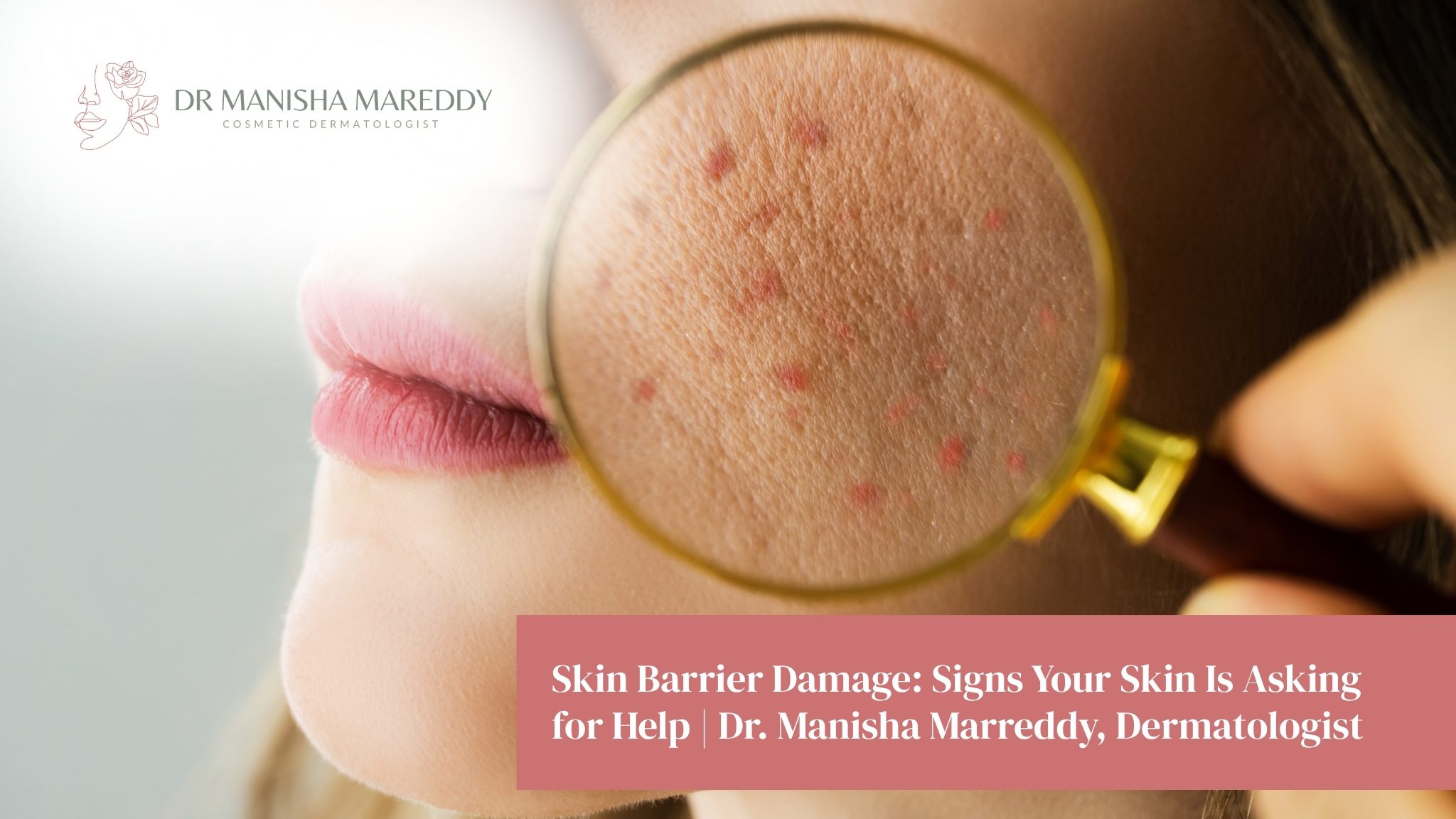
When the skin barrier is healthy, the skin generally feels comfortable, hydrated and resilient. When it becomes damaged, however, you may notice dryness, tightness, redness, irritation, burning or increased sensitivity to products that previously caused no problems.
Skin barrier damage has become an increasingly discussed skincare concern, particularly as people use multiple active ingredients, exfoliants, retinoids, peels and other cosmetic products. While many of these products can be beneficial when used correctly, excessive or inappropriate use may irritate the skin.
If your skin suddenly seems more sensitive than usual, it may be time to reconsider your skincare routine and consult a dermatologist.
For those looking for skin barrier treatment in Hyderabad, Dr. Manisha Marreddy’s dermatology practice provides professional evaluation and personalized treatment for a wide range of skin concerns.
What Is the Skin Barrier?
The skin barrier is primarily associated with the outermost layer of the skin, known as the stratum corneum. It helps reduce water loss from the skin while providing protection against external irritants and environmental factors.
A healthy skin barrier helps the skin:
- Retain moisture
- Maintain hydration
- Protect against irritants
- Reduce excessive water loss
- Support normal skin function
- Improve overall skin comfort
When this protective barrier is disrupted, the skin may become dry, reactive and more vulnerable to irritation.
This does not necessarily mean your skin is permanently damaged. With appropriate care and by addressing the underlying cause, the barrier can often recover.
What Causes Skin Barrier Damage?
There is rarely just one reason why the skin barrier becomes compromised. Several skincare, environmental and lifestyle factors can contribute.
1. Over-Exfoliation
Exfoliation can help remove dead skin cells and improve skin texture. However, exfoliating too frequently or using multiple exfoliating products together can irritate the skin.
Products containing acids such as AHAs and BHAs can be useful for selected skin concerns, but excessive use may lead to dryness and irritation.
Using a physical scrub alongside several chemical exfoliants can further increase the risk of irritation.
2. Excessive Use of Active Ingredients
Modern skincare routines can contain multiple active ingredients, including:
- Retinoids
- Vitamin C
- Salicylic acid
- Glycolic acid
- Lactic acid
- Benzoyl peroxide
- Other exfoliating or treatment ingredients
These ingredients can be beneficial when selected and used appropriately. However, combining several strong actives without considering your skin’s tolerance can sometimes result in irritation.
If your skin has suddenly become red, dry or sensitive, simplifying your routine may be helpful.
3. Harsh Cleansers
Cleansing is an important part of skincare, but using a cleanser that is too harsh for your skin may contribute to dryness and discomfort.
Very hot water, excessive cleansing and aggressive scrubbing can also affect the skin’s natural protective function.
4. Environmental Exposure
Sun exposure, dry weather, pollution, wind and changes in humidity can affect the skin.
People living in urban environments may experience exposure to multiple environmental stressors. Hyderabad’s climate can also vary significantly between hot, dry and humid conditions, making appropriate skincare particularly important.
5. Certain Skin Conditions
Some dermatological conditions can affect the skin barrier and cause increased sensitivity.
Conditions such as eczema, dermatitis, acne and rosacea can be associated with dryness, inflammation or irritation.
If you repeatedly experience redness, itching, burning or scaling, it is important to determine whether an underlying skin condition is contributing to the problem.
Signs Your Skin Barrier May Be Damaged
Recognizing the warning signs early can help prevent continued irritation.
1. Persistent Dryness
One of the most common signs is unusual or persistent dryness.
Your skin may feel dry even after applying moisturizer. You may also notice roughness or flaking.
If your skin was previously comfortable but suddenly feels dry and tight, your skincare routine or another underlying factor may be contributing.
2. Skin Feels Tight After Cleansing
Healthy skin should not consistently feel extremely tight immediately after washing.
If your face feels stretched, uncomfortable or unusually dry after cleansing, your cleanser or cleansing routine may be too harsh for your skin.
3. Increased Sensitivity
Products that previously felt comfortable may suddenly sting or burn.
You might experience irritation when applying:
- Moisturizer
- Sunscreen
- Vitamin C
- Retinoids
- Acne treatments
- Makeup
Increased sensitivity can be a sign that the skin barrier is compromised.
4. Burning or Stinging
A burning or stinging sensation, especially when applying ordinary skincare products, should not be ignored.
While certain active products can cause mild temporary sensations, persistent burning may indicate irritation or another dermatological condition.
If symptoms continue, a skin sensitivity treatment in Hyderabad consultation with a dermatologist may be appropriate.
5. Redness
Persistent redness can occur when the skin becomes irritated.
Redness may be particularly noticeable around the cheeks, nose and other sensitive areas.
However, redness can have many causes, including rosacea, dermatitis and allergic reactions. Therefore, persistent redness should not automatically be assumed to be skin barrier damage.
6. Flaking and Peeling
Visible flakes or peeling skin may occur when the skin becomes excessively dry or irritated.
This is especially common after overusing exfoliating products or retinoids.
Continuing to apply multiple active ingredients in an attempt to “remove” the peeling skin may make irritation worse.
7. Breakouts After Changing Your Routine
A damaged skin barrier does not necessarily directly cause acne, but irritation and inappropriate skincare products can contribute to congestion or worsening breakouts.
If your skin suddenly becomes both irritated and acne-prone after introducing multiple new products, simplifying your routine may be worth considering.
8. Rough Skin Texture
When the skin barrier is compromised, the skin may lose its smooth, comfortable texture.
It may feel rough or uneven to the touch even if you previously had relatively smooth skin.
Skin Barrier Damage vs. Dry Skin: Are They the Same?
Not exactly.
Dry skin generally refers to a lack of oil or lipids in the skin, while skin barrier dysfunction refers to impaired protective function.
The two can overlap.
For example, a person with naturally dry skin may have an increased tendency toward barrier problems. Similarly, excessive cleansing or exfoliation can contribute to both dryness and barrier disruption.
This is why persistent dryness should be assessed in context rather than treated with moisturizer alone.
How to Repair a Damaged Skin Barrier
The good news is that many cases of barrier disruption can improve when the factors causing irritation are addressed.
Simplify Your Skincare Routine
When the skin is irritated, using fewer products may be beneficial.
Consider temporarily reducing unnecessary exfoliants and strong active ingredients until the skin becomes more comfortable.
Use a Gentle Cleanser
Choose a cleanser that is appropriate for your skin type and avoid aggressive scrubbing.
You generally do not need to wash your face repeatedly throughout the day unless there is a specific medical reason.
Moisturize Regularly
A suitable moisturizer can help support hydration and reduce dryness.
Ingredients such as ceramides, glycerin and other moisturizing agents may be used in skincare formulations designed to support the skin barrier.
A dermatologist can recommend products according to your skin type and condition.
Protect Your Skin From the Sun
Sun exposure can contribute to irritation, pigmentation and premature skin aging.
Daily broad-spectrum sunscreen is an important part of maintaining healthy skin.
If your skin is highly sensitive, a dermatologist can help you choose a sunscreen that is more comfortable for your skin.
Avoid Aggressive Scrubbing
Physical scrubs and rough exfoliating tools can increase irritation, especially when the skin is already sensitive.
Allow your skin to recover instead of repeatedly trying to remove flakes or roughness.
How Long Does Skin Barrier Repair Take?
The recovery period depends on the severity of the irritation and the underlying cause.
Mild irritation may improve after simplifying the skincare routine and restoring hydration. More persistent symptoms may require professional evaluation and treatment.
If your skin continues to burn, peel, itch or become red despite simplifying your routine, it may not simply be a damaged barrier. An underlying dermatological condition could be responsible.
That is why persistent symptoms should be evaluated by a dermatologist.
When Should You See a Dermatologist?
You should consider consulting a dermatologist if:
- Your skin remains irritated for several weeks.
- Moisturizers or sunscreen consistently sting.
- You experience persistent redness.
- Your skin repeatedly peels or cracks.
- You have severe itching or burning.
- You develop unexplained rashes.
- Your skin suddenly becomes extremely sensitive.
- Your skincare routine is causing repeated reactions.
- You have acne, eczema, rosacea or another skin condition alongside sensitivity.
A dermatologist can determine whether your symptoms are due to barrier dysfunction, an allergy, dermatitis, acne, rosacea or another skin condition.
Why Professional Diagnosis Matters
The term “damaged skin barrier” is frequently used online to describe many different skin problems.
However, redness, dryness, burning and peeling can occur because of several different conditions.
For example, persistent facial redness could be related to rosacea. Recurrent itching and scaling could suggest dermatitis. Severe dryness could be related to eczema or another dermatological condition.
Using barrier-repair products alone may therefore not address the actual cause.
A dermatologist can examine your skin, understand your skincare history and determine whether additional treatment is necessary.
Skin Barrier and Common Dermatological Treatments
If you have an underlying skin condition, repairing the barrier may require more than changing your moisturizer.
Dr. Manisha Mareddy’s dermatology practice provides treatment for a broad range of skin concerns, including acne, pigmentation, melasma, rosacea and other cosmetic and dermatological conditions.
For example, if acne treatment is causing excessive irritation, a dermatologist may need to modify the treatment approach rather than asking you to discontinue acne care completely.
Similarly, if pigmentation is accompanied by sensitivity, treatment needs to balance pigmentation control with preservation of the skin barrier.
This personalized approach is particularly important for people looking for damaged skin barrier treatment.
Common Skin Barrier Mistakes to Avoid
Using Too Many Products
A complicated routine is not necessarily a better routine.
Using several active ingredients simultaneously can increase the possibility of irritation.
Exfoliating Every Day
Daily exfoliation is not necessary for everyone. Excessive exfoliation can leave sensitive skin feeling dry and irritated.
Using Very Hot Water
Hot water can worsen dryness and discomfort.
Use comfortably lukewarm water when cleansing the face.
Changing Products Frequently
Constantly changing skincare products makes it difficult to identify which product is causing irritation.
Introduce new products gradually where appropriate.
Ignoring Persistent Symptoms
If your skin continues to burn, itch or become inflamed, do not assume that you simply need a stronger moisturizer.
Persistent symptoms deserve professional evaluation.
Can Hyderabad’s Climate Affect the Skin Barrier?
Environmental conditions can influence skin hydration and comfort.
Heat, humidity, air conditioning, dust, pollution and sun exposure can all affect how the skin feels.
People who spend significant time outdoors may also experience increased sun exposure, while those working in air-conditioned environments may experience drier indoor air.
Maintaining a simple skincare routine, using appropriate moisturizer and applying sunscreen can help support overall skin health.
However, persistent irritation should not be attributed to climate alone.
How Dr. Manisha Mareddy Can Help
Dr. Manisha Mareddy is a cosmetic dermatologist, dermatosurgeon and trichologist practicing in Hyderabad. Her clinic provides care for a range of medical, cosmetic skin and hair concerns. (drmanishamareddydermatologist.com)
A professional consultation can help determine whether your symptoms represent simple irritation or an underlying dermatological condition.
For individuals searching for a best dermatologist in Hyderabad or skin sensitivity treatment in Hyderabad, a personalized evaluation can help identify the most appropriate skincare and treatment approach.
Conclusion
Your skin barrier plays an important role in keeping your skin hydrated, comfortable and protected. When it becomes compromised, your skin may begin sending warning signals such as dryness, tightness, redness, burning, peeling, roughness and increased sensitivity.
The most important step is to identify what is causing the irritation. Over-exfoliation, harsh cleansers, excessive active ingredients, environmental exposure and certain skin conditions can all contribute to barrier problems.
If your skin is suddenly reacting to products that previously worked well, simplify your routine and avoid unnecessary irritation. If symptoms persist or become severe, consult a dermatologist rather than continuing to experiment with skincare products.
For those searching for skin barrier treatment in Hyderabad, damaged skin barrier treatment, or sensitive skin treatment, Dr. Manisha Mareddy can evaluate your skin concerns and recommend an individualized approach.
Contact Dr. Manisha Mareddy
Clinic: Shlok Dermatology & Wellness
Address: 3rd Floor, MN Capital, Power Welfare Society, Kokapet, Hyderabad, Telangana 500075
Phone: +91 89779 25537 / +91 90002 35537
Timings: 10:00 AM – 8:00 PM
Website: drmanishamareddydermatologist.com
If your skin is persistently dry, irritated, burning or unusually sensitive, professional dermatological evaluation can help determine the cause and guide appropriate skin barrier repair.