

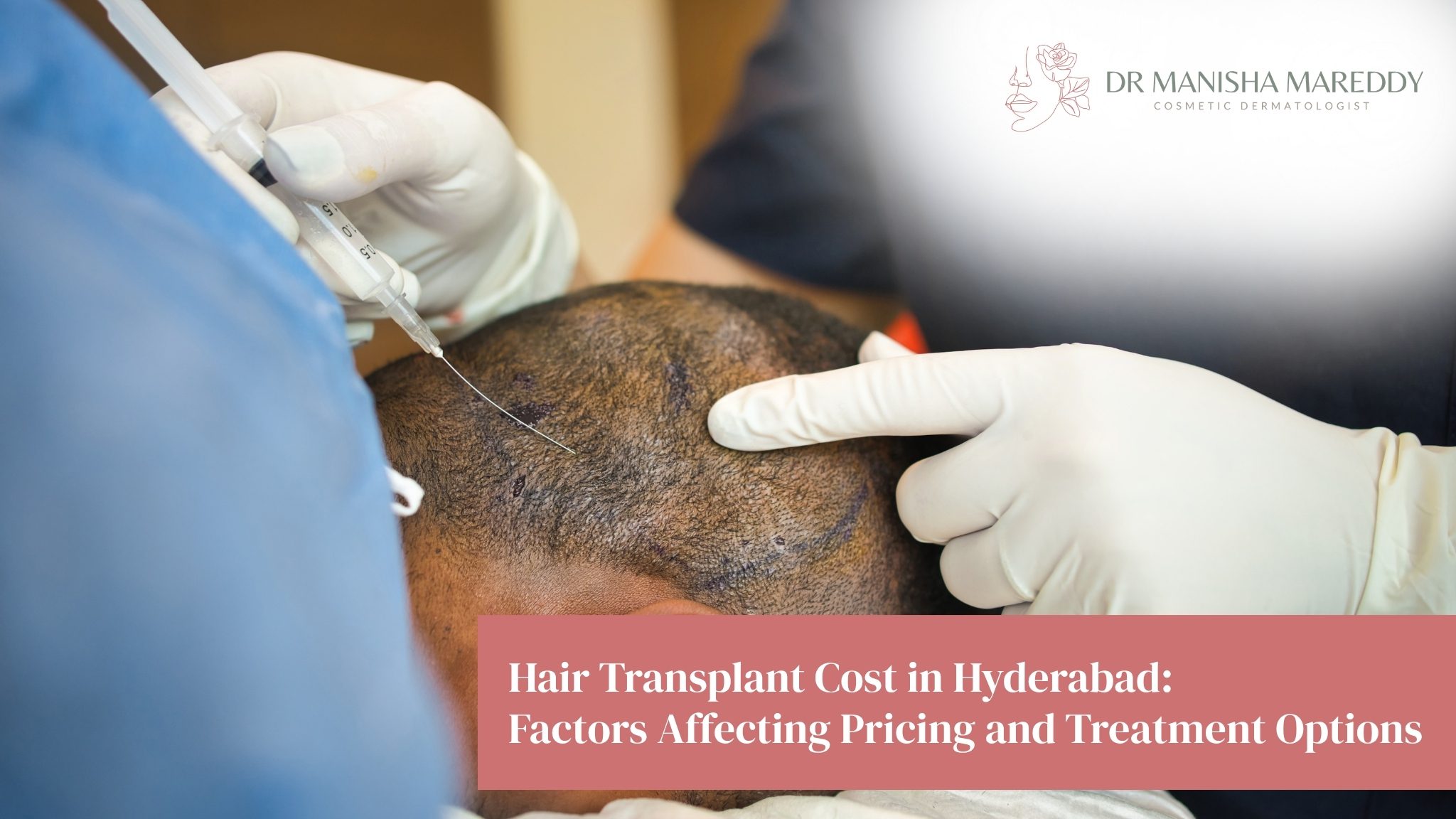
Hair loss and baldness are common concerns affecting both men and women. Whether it is a receding hairline, thinning crown, or noticeable bald patches, hair loss can influence confidence and overall appearance. With advancements in dermatology and hair restoration, hair transplant in Hyderabad has become an option for individuals looking for long-term solutions to permanent hair loss.
One of the biggest considerations before undergoing the procedure is the overall cost. The hair transplant cost in Hyderabad can vary depending on the number of grafts required, the technique used, the surgeon’s expertise, the condition of the donor area, and the facilities available at the clinic.
Understanding these factors can help you make an informed decision and choose a suitable treatment option without compromising on safety or quality.
At Dr. Manisha Mareddy, patients can explore dermatologist-guided hair and scalp treatments based on their individual concerns. Understanding the cause of hair loss is an important first step before deciding whether medical treatment, hair restoration therapy, or surgical transplantation is appropriate.
In this blog, we will explore hair transplant pricing, the factors influencing treatment costs, available techniques, and alternative hair restoration options in Hyderabad.
What Is a Hair Transplant?
A hair transplant is a surgical procedure that involves transferring healthy hair follicles from a donor area, usually the back or sides of the scalp, to areas experiencing hair thinning or baldness.
The transplanted follicles are placed carefully to achieve natural-looking hair growth and improve hair density.
Hair transplantation is commonly considered for people experiencing androgenetic alopecia, also known as male or female pattern baldness.
The procedure generally involves two important stages:
- Hair follicle extraction: Healthy hair follicles are collected from the donor area.
- Hair follicle implantation: The extracted follicles are placed into the recipient area according to the planned hairline and density.
The suitability of the procedure depends on the individual’s hair loss pattern, donor hair availability, medical history, and long-term hair restoration goals.
Consulting an experienced dermatologist in Hyderabad can help identify the underlying cause of hair loss and determine the most appropriate treatment approach.
What Is the Average Hair Transplant Cost in Hyderabad?
The hair transplant cost in Hyderabad varies depending on the procedure, graft requirements, and treatment complexity.
As an indicative 2026 market estimate, hair transplant procedures in Hyderabad may cost approximately ₹35,000 to ₹2,75,000 or more. The actual price depends on the technique and number of grafts required. Cost of Hair Transplant+2
The following table provides an approximate overview of commonly discussed treatment options.
| Hair Transplant Technique | Indicative Cost Per Graft |
|---|---|
| FUE Hair Transplant | ₹35–₹65 |
| FUT Hair Transplant | ₹20–₹45 |
| DHI Hair Transplant | ₹55–₹110 |
| Sapphire FUE | ₹45–₹90 |
Indicative market estimates, not confirmed prices or quotations from Dr. Manisha Mareddy’s clinic. Actual costs may differ.
The total expense depends on the number of grafts required, the clinic’s pricing structure, and what is included in the treatment package.
Major Factors Affecting Hair Transplant Cost in Hyderabad
Several factors determine the overall price of a hair transplant. Understanding these aspects helps patients compare treatment options and evaluate the value of different quotations.
1. Number of Hair Grafts Required
The number of grafts required is one of the biggest factors influencing the total treatment cost.
A graft is a natural grouping of hair follicles that may contain one to four individual hairs. The number needed depends on the extent of hair loss and the desired coverage.
For example:
- Mild hairline recession may require approximately 1,000–1,500 grafts.
- Moderate hair thinning may require approximately 1,500–2,500 grafts.
- Extensive baldness may require 3,000 or more grafts, depending on donor availability.
These are general planning estimates rather than fixed requirements. A specialist must examine the scalp before recommending the graft count.
2. Hair Transplant Technique
Different hair transplant techniques involve different extraction and implantation methods. The selected procedure can significantly influence the overall cost.
FUE, FUT, and DHI are commonly discussed options, each offering different advantages and considerations.
Advanced techniques may involve specialised instruments, additional procedural steps, and different levels of surgical complexity.
3. Surgeon’s Experience and Expertise
The experience and qualifications of the surgeon are important considerations when evaluating hair transplant costs.
Hair transplantation requires careful planning, particularly when designing the hairline, selecting grafts, and determining the direction and angle of implantation.
An experienced medical professional can assess donor hair quality, plan suitable coverage, and help minimise avoidable complications.
Patients should understand who performs the extraction, recipient-site creation, and implantation rather than comparing clinics based only on their advertised prices.
4. Condition of the Donor Area
The donor area plays an important role in determining the feasibility and cost of transplantation.
Patients with good donor hair density may have more suitable follicles available for transplantation. However, individuals with limited donor hair may require additional planning or staged procedures.
The quality, density, and distribution of donor hair are assessed before deciding how many grafts can be safely harvested.
5. Extent and Pattern of Hair Loss
The severity of hair loss directly influences the complexity of treatment.
People with mild hairline recession may require a relatively smaller procedure, while individuals with extensive baldness may need more grafts and potentially multiple sessions.
A proper scalp assessment helps determine the treatment requirements and avoid unnecessary graft extraction.
6. Clinic Infrastructure and Technology
The clinic’s infrastructure, surgical equipment, hygiene standards, and medical support can also influence the overall cost.
Hair transplantation requires appropriate sterile facilities, specialised instruments, and trained medical professionals.
When comparing clinics, patients should prioritise medical standards and surgical expertise rather than choosing a procedure based entirely on affordability.
7. Post-Procedure Care and Follow-Up
Hair transplant expenses may also include post-procedure medications, follow-up consultations, scalp care instructions, and additional treatments when recommended.
Some clinics include these services in their treatment packages, while others charge separately.
Always request a detailed quotation covering the complete treatment journey.
Different Hair Transplant Treatment Options in Hyderabad
Choosing the right hair transplant technique depends on hair loss severity, donor hair availability, and individual expectations.
1. Follicular Unit Extraction (FUE)
FUE Hair Transplant
FUE is a commonly performed hair transplantation technique in which individual hair follicular units are extracted from the donor area using specialised instruments.
The extracted follicles are then implanted into areas experiencing hair loss.
Benefits of FUE:
- Individual follicle extraction.
- No long linear scar.
- Relatively quicker initial recovery compared with FUT.
- Suitable for selected patients who prefer shorter hairstyles.
- Allows careful placement of individual follicular units.
The final cost depends on the number of grafts and the complexity of the procedure.
2. Follicular Unit Transplantation (FUT)
FUT Hair Transplant
FUT, also known as the strip method, involves removing a small strip of scalp from the donor area. The strip is then divided into individual follicular units for transplantation.
Benefits of FUT:
- Can provide a substantial number of grafts.
- Efficient use of suitable donor hair.
- May be appropriate for selected patients requiring extensive coverage.
- Can be cost-effective compared with certain other techniques.
FUT generally leaves a linear scar in the donor area and requires appropriate wound care during recovery.
3. Direct Hair Implantation (DHI)
DHI Hair Transplant
DHI is a hair transplantation approach that uses specialised implanter pens to place extracted follicles into the recipient area.
The technique allows the surgeon to control the placement, angle, and direction of the transplanted follicles.
Benefits of DHI:
- Controlled follicle implantation.
- Precise placement in selected treatment areas.
- Useful for certain hairline restoration procedures.
- Allows careful management of graft distribution.
DHI may involve higher treatment costs because of the specialised instruments and procedural requirements.
4. Sapphire FUE
Sapphire FUE is a variation of the FUE technique that uses sapphire blades to create recipient sites.
It follows the same general extraction process as FUE, but the recipient-site preparation involves specialised sapphire instruments.
The overall suitability and benefits depend on the surgeon’s technique, patient characteristics, and treatment goals.
Hair Transplant Cost Based on the Number of Grafts
The number of grafts required can significantly influence the overall cost.
The following is an illustrative 2026 FUE cost estimate using a market range of ₹35–₹65 per graft.
| Number of Grafts | Approximate Cost |
|---|---|
| 1,000 grafts | ₹35,000–₹65,000 |
| 1,500 grafts | ₹52,500–₹97,500 |
| 2,000 grafts | ₹70,000–₹1,30,000 |
| 2,500 grafts | ₹87,500–₹1,62,500 |
| 3,000 grafts | ₹1,05,000–₹1,95,000 |
These are mathematical estimates based on an indicative per-graft range, not clinic quotations. Actual pricing may include minimum procedure charges, additional services, and taxes.
It is important to remember that a higher graft count does not automatically guarantee better results. Proper donor management and appropriate graft distribution are essential for achieving natural-looking outcomes.
Additional Expenses to Consider Before Hair Transplantation
When calculating the hair transplant cost in Hyderabad, patients should also consider expenses beyond the actual procedure.
Some additional costs may include:
1. Initial Consultation: A medical consultation helps evaluate hair loss, donor hair availability, and treatment suitability.
2. Diagnostic Tests: Depending on medical history and clinical findings, blood investigations or scalp examinations may be recommended.
3. Medications: Some patients may require prescribed medications before or after transplantation.
4. Post-Procedure Care: Specialised scalp cleansing products and aftercare supplies may contribute to the total expense.
5. Follow-Up Appointments: Regular consultations help monitor healing, graft growth, and overall treatment progress.
6. Additional Hair Restoration Sessions: Selected patients may require further procedures or medical treatment to address ongoing hair thinning.
Before proceeding, request a complete cost breakdown to understand what is included and what may be charged separately.
Hair Transplant vs PRP vs GFC: Understanding the Treatment Options
Not everyone experiencing hair loss requires a surgical procedure. Depending on the cause and severity, non-surgical treatments may be appropriate.
Three commonly discussed hair restoration approaches include hair transplantation, Platelet-Rich Plasma (PRP), and Growth Factor Concentrate (GFC).
| Treatment | Main Purpose | Suitable For |
|---|---|---|
| Hair Transplant | Relocates healthy hair follicles | Selected cases of permanent pattern baldness |
| PRP Treatment | Uses platelet-rich plasma to support hair growth | Selected cases of hair thinning |
| GFC Treatment | Uses a prepared growth-factor concentrate | Selected cases of hair thinning |
PRP Hair Treatment in Hyderabad
Platelet-Rich Plasma (PRP) is a non-surgical treatment that uses a concentrated preparation of platelets obtained from the patient’s blood.
The collected blood is processed, and the prepared plasma is injected into selected areas of the scalp.
PRP may help improve hair density in some individuals with certain types of hair thinning. Multiple sessions may be recommended depending on the patient’s condition and response.
Learn more about PRP hair treatment in Hyderabad and its potential benefits.
GFC Hair Treatment in Hyderabad
Growth Factor Concentrate (GFC) is another blood-derived treatment used for selected hair loss concerns.
The treatment involves preparing a concentrate from the patient’s blood and administering it into targeted areas of the scalp.
GFC and PRP differ in their preparation methods. Neither guarantees hair regrowth, and the suitability of each treatment depends on the underlying condition.
Explore PRP vs GFC hair treatment in Hyderabad to understand their differences.
Medical Hair Loss Treatment
Medical hair loss treatment may be recommended for individuals experiencing hereditary hair thinning, excessive shedding, or other scalp-related concerns.
Depending on the diagnosis, a dermatologist may recommend medications, scalp treatments, or other appropriate therapies.
Explore hair fall treatment in Hyderabad to understand the available treatment approaches.
How to Choose the Right Hair Transplant Clinic in Hyderabad
Choosing the right clinic is just as important as understanding the treatment cost.
Before selecting a clinic, consider the following factors:
- Doctor’s Qualifications: Check the surgeon’s medical qualifications and experience in hair restoration procedures.
- Treatment Assessment: Ensure that your scalp and donor area are evaluated before recommending transplantation.
- Transparent Pricing: Ask for a detailed quotation covering graft count, procedure charges, medications, and follow-up care.
- Hygiene and Safety: Verify that the clinic follows appropriate sterilisation and infection-control practices.
- Treatment Planning: The procedure should be planned according to your hair loss pattern and long-term restoration goals.
- Post-Procedure Support: Ensure that proper recovery guidance and follow-up consultations are available.
Avoid selecting a clinic simply because it advertises the lowest price. The quality of medical care, surgical planning, and patient safety should always remain priorities.
Why Consult Dr. Manisha Mareddy for Hair Loss Treatment in Hyderabad?
Understanding the cause of hair loss is essential before selecting a suitable treatment. A personalised dermatological evaluation can help determine whether you need medical hair loss management, hair regrowth therapy, or a surgical hair restoration consultation.
Dr. Manisha Mareddy is a dermatologist, dermatosurgeon, and trichologist practising at Shlok Dermatology & Wellness in Hyderabad.
Her hair and scalp treatment services include:
- Hair loss treatment
- Hair regrowth treatment
- PRP hair treatment
- GFC hair treatment
- Scalp dandruff treatment
- Hair restoration treatments
The clinic’s approach focuses on evaluating individual concerns, understanding medical history, and recommending appropriate treatment options.
Patients considering transplantation should discuss the surgical procedure, the professional responsible for performing it, and the expected costs during consultation.
Clinic: Shlok Dermatology & Wellness
Location: 3rd Floor, MN Capital Building, Kokapet, Hyderabad – 500075
Website: Dr. Manisha Mareddy
Appointment: Contact the clinic
Frequently Asked Questions About Hair Transplant Cost in Hyderabad
1. What is the average hair transplant cost in Hyderabad?
The cost can range from approximately ₹35,000 to ₹2,75,000 or more, depending on the procedure, number of grafts, surgeon’s expertise, and clinic facilities. An exact quotation requires an individual assessment.
2. What is the cost of FUE hair transplantation in Hyderabad?
Indicative FUE pricing in Hyderabad is approximately ₹35–₹65 per graft. The total cost depends on the number of follicles required and the clinic’s pricing structure.
3. Is FUE more expensive than FUT?
Generally, FUE may cost more than FUT because individual follicular units are extracted using specialised instruments. However, actual pricing varies between clinics.
4. Which hair transplant technique is the most affordable?
FUT is generally considered a more economical option compared with certain FUE and DHI procedures. However, the appropriate technique should be selected based on donor hair availability and individual treatment requirements.
5. Does the number of grafts affect hair transplant pricing?
Yes. The number of grafts is one of the primary factors determining the total cost. Larger treatment areas generally require more grafts and increase the overall expense.
6. Is PRP treatment cheaper than a hair transplant?
PRP is generally less expensive than surgical transplantation because it is a non-surgical treatment. However, multiple sessions and maintenance treatments may be required.
7. Can hair loss be treated without a hair transplant?
Yes. Depending on the cause, options such as medication, PRP, GFC, and scalp treatments may help manage certain types of hair loss. A dermatologist can recommend the appropriate approach after evaluation.
8. How long does it take to see hair transplant results?
Initial new hair growth may become noticeable around three to four months after transplantation. More visible results generally develop over six to twelve months, with some patients requiring up to eighteen months.
9. Is hair transplantation a permanent solution?
Transplanted follicles from suitable donor areas can provide long-lasting hair growth. However, existing non-transplanted hair may continue thinning, and ongoing medical management may be necessary.
10. How can I find the right hair transplant treatment in Hyderabad?
Start with a consultation with a qualified dermatologist or hair transplant surgeon. A detailed scalp assessment helps identify the cause of hair loss, evaluate donor hair availability, and determine the most suitable treatment.
Conclusion
Understanding the hair transplant cost in Hyderabad is an important step before choosing a hair restoration procedure. Factors such as the number of grafts, transplantation technique, surgeon’s experience, donor hair quality, and post-procedure care all influence the final price.
While FUE, FUT, DHI, and Sapphire FUE offer different approaches to hair restoration, not everyone experiencing hair loss requires surgery. Non-surgical options such as PRP, GFC, and medical hair loss treatments may be appropriate for selected individuals.
The best treatment decision begins with identifying the underlying cause of hair loss and understanding your individual requirements.
If you are experiencing excessive hair shedding, thinning, or baldness, consult a qualified dermatologist to explore suitable treatment options. Dr. Manisha Mareddy in Hyderabad offers personalised hair and scalp treatment consultations to help individuals understand their concerns and make informed decisions about their hair health.