

Introduction
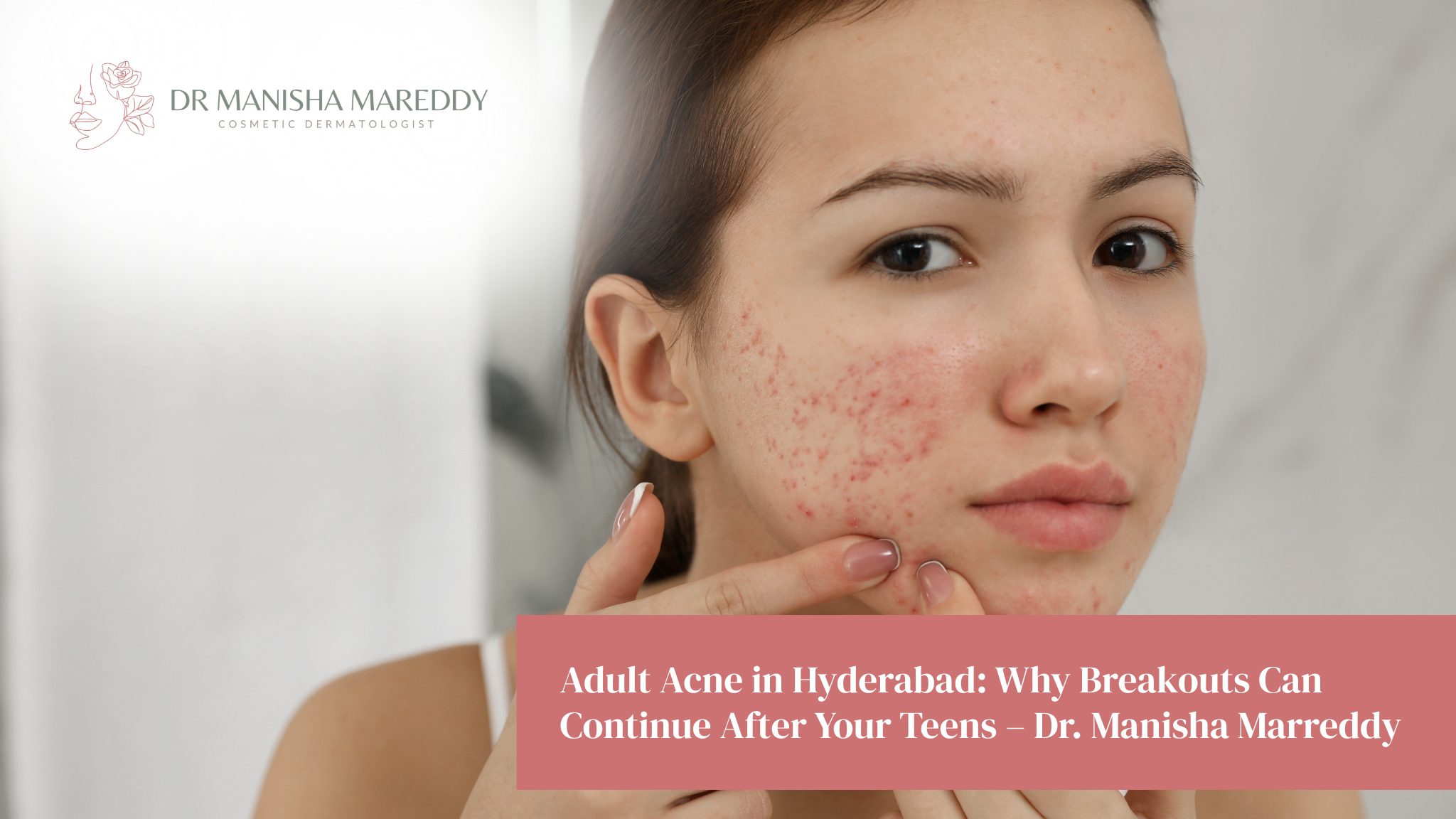
Many people assume that acne is something they will simply outgrow after their teenage years. Yet for many adults, breakouts continue well into their 20s, 30s and even later. Some people who never experienced significant acne during adolescence may also develop breakouts for the first time as adults.
Adult acne can be particularly frustrating because it often appears alongside a busy lifestyle, work-related stress, hormonal fluctuations and frequent exposure to pollution or cosmetics. Repeated breakouts may also leave behind acne scars, dark spots and uneven skin texture.
According to Dr. Manisha Mareddy’s dermatology practice in Hyderabad, acne can affect adults and may be associated with factors including hormonal changes, stress, excess oil production, medications, cosmetics and lifestyle factors. Her clinic provides personalized treatment for different grades of acne, with the goal of controlling active breakouts and minimizing the risk of scarring.
If you are searching for adult acne treatment in Hyderabad, understanding why acne continues after your teenage years can help you take the right approach.
What Is Adult Acne?
Adult acne refers to acne that occurs during adulthood. It may continue from adolescence or develop for the first time after the teenage years.
Acne develops when hair follicles become clogged with oil, dead skin cells and other debris. Increased oil production, inflammation and bacterial involvement can contribute to the formation of pimples.
Adult acne may appear as:
- Whiteheads
- Blackheads
- Small red bumps
- Pustules
- Painful nodules
- Cysts
- Acne-related dark spots
It can occur on the face, neck, chest, shoulders and back. Dr. Manisha Mareddy’s acne treatment information notes that pimples can affect multiple areas of the body rather than only the face.
Why Does Acne Continue After the Teenage Years?
1. Hormonal Fluctuations
Hormones are one of the important factors associated with adult acne.
Changes in hormone levels can influence oil production and contribute to clogged pores and inflammation. This is why some adults notice recurring breakouts around particular times of the month.
Hormonal acne may also be associated with conditions such as polycystic ovary syndrome (PCOS).
Dr. Manisha Mareddy’s acne treatment approach considers underlying factors such as PCOS and insulin resistance when clinically relevant.
For individuals experiencing recurring or persistent breakouts, professional evaluation can help determine whether hormonal factors may be contributing.
2. Stress and a Busy Lifestyle
Modern lifestyles can involve long working hours, irregular sleep, deadlines and emotional stress.
Stress does not necessarily cause acne by itself, but it can contribute to worsening breakouts in people who are already acne-prone.
A stressful lifestyle may also lead to habits that indirectly affect the skin, such as inconsistent skincare, inadequate sleep or frequently touching the face.
3. Excess Oil Production
Sebum, or natural skin oil, helps protect the skin. However, excessive oil production can contribute to clogged pores.
When excess sebum combines with dead skin cells, pores can become blocked, creating an environment where acne lesions can develop.
This is one reason oily or combination skin may be more prone to breakouts.
4. Clogged Pores
Dead skin cells can accumulate inside hair follicles and combine with oil to create blockages.
These blockages can develop into blackheads and whiteheads and may progress to inflammatory pimples.
Using skincare products that are not appropriate for acne-prone skin can potentially make this problem worse.
5. Comedogenic Cosmetics and Skincare Products
Makeup, moisturizers, sunscreens and hair products can sometimes contribute to clogged pores, particularly when they are not suitable for acne-prone skin.
Dr. Manisha Mareddy’s acne information identifies comedogenic cosmetic products among factors that can increase the likelihood of acne.
If you regularly wear makeup or use multiple skincare products, choosing appropriate non-comedogenic formulations can be an important part of an acne-care routine.
6. Hormonal Conditions Such as PCOS
For some women, persistent acne can be associated with hormonal conditions such as PCOS.
Acne accompanied by irregular menstrual cycles, increased facial or body hair, weight changes or other hormonal symptoms may warrant medical evaluation.
Treating the underlying hormonal condition may be an important component of managing the associated acne.
7. Certain Medications
Some medications may contribute to acne or acne-like eruptions.
If your breakouts began after starting a new medication, inform your dermatologist. Never discontinue a prescribed medication without speaking with the doctor who prescribed it.
A dermatologist can assess whether the medication may be contributing and determine an appropriate course of action.
8. Pollution and Environmental Exposure
People living and working in busy urban environments may be exposed to dust, pollution, heat and humidity.
These environmental factors can interact with oil, sweat and skincare products and may contribute to skin congestion in acne-prone individuals.
While pollution may not be the sole cause of adult acne, maintaining an appropriate cleansing and skincare routine can help keep the skin comfortable and clean.
9. Diet and Lifestyle Factors
Diet does not affect every person with acne in the same way. However, some people may notice that certain dietary patterns coincide with worsening breakouts.
Dr. Manisha Mareddy’s acne information identifies factors such as consumption of sugary foods, stress and lifestyle habits among factors that may contribute to acne.
Rather than following restrictive diets without professional guidance, it is better to maintain a balanced diet and discuss persistent acne with a dermatologist.
Why Is Adult Acne Different From Teenage Acne?
Although the underlying acne process can be similar, adult acne may have different patterns and triggers.
Teenage acne is often strongly associated with puberty and increased sebaceous gland activity. Adult acne may continue because of hormonal fluctuations, stress, skincare products, medications, genetics or other factors.
Women may particularly notice recurring acne around the lower face, jawline or chin during hormonal fluctuations.
However, the location of acne alone cannot establish its cause. A dermatologist should assess the complete pattern and history.
Can Adult Acne Cause Permanent Scars?
Yes.
One of the biggest concerns with persistent adult acne is the risk of scarring.
Inflammatory acne, particularly large nodules and cysts, can damage deeper layers of the skin. Picking or squeezing pimples can further increase the risk of scars and pigmentation.
Dr. Manisha Mareddy emphasizes early acne treatment because even mild acne can potentially lead to permanent scarring if left untreated.
This is why acne treatment in Hyderabad should focus not only on clearing current breakouts but also on preventing future acne and minimizing complications.
Why You Should Not Pop Your Pimples
It can be tempting to squeeze a painful or visible pimple before an important event.
However, squeezing or picking acne can increase inflammation and potentially contribute to:
- Increased redness
- Skin damage
- Dark marks
- Delayed healing
- Acne scars
- Secondary infection
If you have persistent blackheads or whiteheads, professional pimple treatment in Hyderabad may include controlled comedone extraction performed in an appropriate clinical setting.
Dr. Manisha Mareddy’s clinic offers comedone extraction using specialized tools in a sterile environment.
How Is Adult Acne Diagnosed?
A dermatologist generally considers several factors before recommending treatment.
These may include:
- Age when acne began
- Location and type of lesions
- Severity of inflammation
- Skin type
- Menstrual or hormonal history when relevant
- Current medications
- Skincare and cosmetic products
- Diet and lifestyle
- Family history
- Previous acne treatments
- Presence of acne scars or pigmentation
Dr. Manisha Mareddy’s approach begins with assessing the skin and identifying potential underlying causes before creating a personalized treatment plan.
Professional Adult Acne Treatment Options
There is no single acne treatment that works for everyone. The right treatment depends on the type and severity of acne and the individual’s skin.
Topical Medications
Prescription topical treatments may be used to address clogged pores, inflammation and active acne.
Depending on the diagnosis, a dermatologist may recommend ingredients such as topical retinoids or other acne medications.
Dr. Manisha Mareddy lists topical retinoids among the treatment options used for acne management.
Oral Medications
Moderate to severe acne may sometimes require oral medication.
Depending on the individual’s condition, a dermatologist may consider oral antibiotics, hormonal therapy or isotretinoin when appropriate.
These medications should only be used under qualified medical supervision.
Chemical Peels
Medical chemical peels can be used as part of an acne-management plan for selected patients.
Dr. Manisha Mareddy’s clinic describes customized chemical peels as an option for mild to moderate acne and improving skin texture by helping remove dead skin cells, excess sebum and buildup from the pores.
Comedone Extraction
Blackheads and whiteheads can sometimes be treated through professional comedone extraction.
This is different from squeezing pimples at home because the procedure is performed using specialized instruments and appropriate clinical hygiene.
Intralesional Injections
Large, inflamed nodules and cysts may require specialized treatment.
Dr. Manisha Mareddy offers intralesional injections for selected severe inflammatory acne lesions, with the goal of reducing inflammation and minimizing the risk of scarring.
Laser-Based Treatments
Laser treatments may have a role in managing certain acne-related concerns.
Dr. Manisha Mareddy’s acne treatment information notes laser toning as an adjunct treatment for post-inflammatory hyperpigmentation following acne.
The suitability of laser treatment depends on the patient’s skin, pigmentation and acne status.
What About Acne Scars?
Treating active acne and treating acne scars are two different goals.
If active acne is still developing, the priority is usually to control new breakouts and prevent additional scarring.
Once acne is controlled, treatments for established scars may be considered based on the type and severity of scarring.
Dr. Manisha Mareddy’s clinic lists procedures including laser resurfacing, microneedling radiofrequency, punch excision, subcision and TCA Cross Peel for selected acne scars.
Morpheus8, a fractional radiofrequency microneedling treatment, is also offered for acne scar concerns and works by delivering RF energy into targeted skin depths to stimulate collagen remodeling.
Adult Acne Skincare: What Should You Do?
A simple and consistent skincare routine can complement professional treatment.
Cleanse Gently
Use a gentle cleanser appropriate for your skin type. Avoid excessive scrubbing.
Choose Non-Comedogenic Products
Look for products formulated for acne-prone skin where appropriate.
Use Sunscreen
Daily broad-spectrum sun protection can help protect the skin and reduce the appearance of post-acne pigmentation becoming more noticeable.
Avoid Picking
Resist the temptation to squeeze or scratch pimples.
Do Not Overuse Active Ingredients
Using several strong acne products simultaneously can irritate the skin and potentially worsen inflammation.
Follow Your Dermatologist’s Plan
Prescription acne treatments often require consistency and patience. Avoid changing your treatment every few days because you do not see immediate results.
Common Adult Acne Mistakes to Avoid
Treating Every Pimple With a New Product
Constantly switching products can irritate the skin.
Using Harsh Scrubs
Acne is not caused by “dirty skin.” Aggressive scrubbing can damage the skin barrier.
Ignoring Hormonal Symptoms
Persistent acne accompanied by other hormonal symptoms deserves professional evaluation.
Waiting Until Acne Scars Appear
Early treatment can help reduce the risk of long-term scarring.
Following Internet Remedies Without Checking the Cause
Home remedies may not address the underlying reason for persistent acne and may sometimes irritate the skin.
When Should You See a Dermatologist?
You should consider consulting a dermatologist if:
- Acne continues despite a consistent skincare routine.
- Breakouts are painful or deep.
- You frequently develop cysts or nodules.
- Acne is leaving dark marks or scars.
- Breakouts are affecting your confidence.
- Acne suddenly develops in adulthood.
- You have acne along with possible hormonal symptoms.
- Over-the-counter products are irritating your skin.
- Acne keeps returning despite previous treatment.
Seeking professional advice early can help prevent acne from progressing and reduce the risk of permanent scarring.
Why Choose Dr. Manisha Mareddy for Adult Acne Treatment in Hyderabad?
Dr. Manisha Mareddy is a cosmetic dermatologist, dermatosurgeon and trichologist practicing in Hyderabad. Her clinic, Shlok Dermatology & Wellness, provides treatment for acne, acne scars and a range of other skin and hair concerns.
Her acne-care approach focuses on identifying potential underlying factors and developing individualized treatment plans. Available acne treatments include topical and oral medications, chemical peels, comedone extraction, intralesional injections and selected laser-based treatments.
For people searching for a best dermatologist for acne in Hyderabad, personalized evaluation is particularly important because adult acne can have different triggers and patterns.
Conclusion
Adult acne is more common than many people realize, and reaching adulthood does not necessarily mean that breakouts will disappear.
Hormonal fluctuations, stress, excess oil production, clogged pores, cosmetics, medications, lifestyle factors and conditions such as PCOS can all contribute to persistent acne. For some people, acne may also continue from adolescence rather than appearing for the first time during adulthood.
The good news is that adult acne can be managed with an appropriate diagnosis and treatment plan. Professional treatment can help control active breakouts, reduce inflammation, prevent new lesions and minimize the risk of acne scars.
If you are struggling with persistent pimples, painful breakouts or recurring adult acne, consulting a dermatologist can help determine the underlying triggers and identify suitable treatment options.
For those searching for adult acne treatment in Hyderabad, hormonal acne treatment in Hyderabad, or pimple treatment in Hyderabad, Dr. Manisha Mareddy provides personalized dermatological care based on individual skin concerns and acne severity.
Contact Dr. Manisha Mareddy
Clinic: Shlok Dermatology & Wellness
Address: 3rd Floor, MN Capital, Power Welfare Society, Kokapet, Hyderabad, Telangana 500075
Phone: +91 89779 25537 / +91 90002 35537
Timings: 10:00 AM – 8:00 PM
Website: drmanishamareddydermatologist.com
For professional evaluation and personalized acne treatment in Hyderabad, consult Dr. Manisha Mareddy and discuss the most suitable approach for your skin.