

Introduction
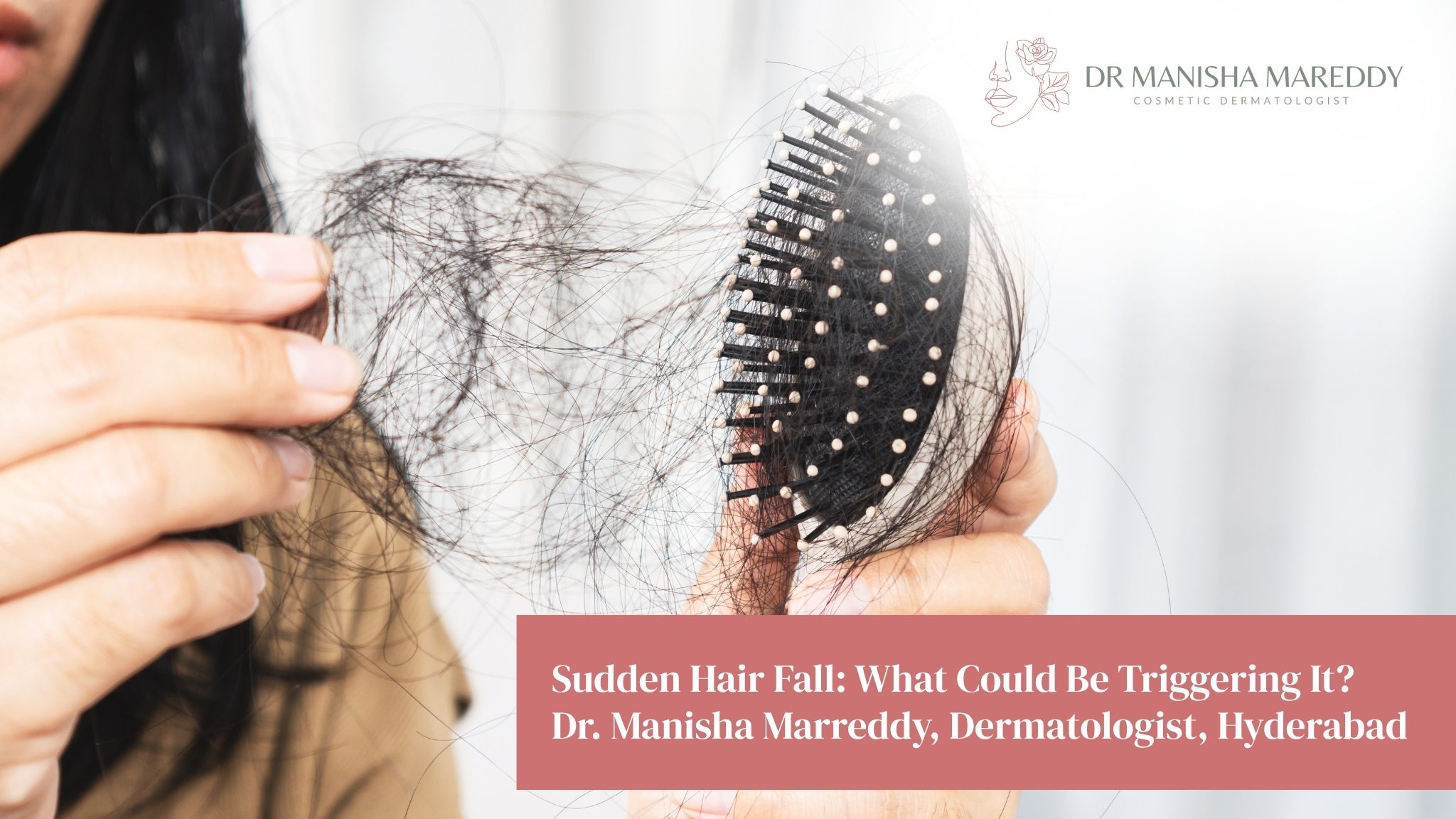
Finding more hair than usual on your pillow, comb, shower drain or clothes can be alarming. While losing some hair every day is normal, a sudden increase in shedding may indicate that something has changed in the hair growth cycle or within the body.
Sudden hair fall can affect both men and women and may occur for several reasons. Stress, illness, nutritional deficiencies, hormonal changes, significant weight loss, medications, genetics and certain scalp or medical conditions can all contribute to excessive shedding.
The important thing is not to assume that every case of hair fall has the same cause. Different types of hair loss require different approaches. Dr. Manisha Mareddy’s hair-loss practice in Hyderabad emphasizes identifying the underlying cause and creating a personalized treatment plan based on the individual’s condition.
If you are looking for sudden hair fall treatment in Hyderabad, understanding what may be triggering the problem is the first step toward appropriate care.
How Much Hair Fall Is Normal?
Hair naturally goes through a continuous growth cycle consisting of three main phases:
- Anagen: The active growth phase
- Catagen: The transition phase
- Telogen: The resting phase
At the end of the resting phase, the hair sheds and the follicle can begin another growth cycle.
A certain amount of daily shedding is therefore expected. However, if you suddenly notice substantially more hair coming out than usual, visible thinning, a widening hair part, receding hairline or bald patches, it may be worth getting a professional evaluation.
Dr. Manisha Mareddy’s hair-loss information explains that disruption of the normal hair-growth cycle can result in different forms of alopecia, including androgenetic alopecia, telogen effluvium and alopecia areata.
What Can Trigger Sudden Hair Fall?
1. Physical or Emotional Stress
Major stress can affect the normal hair-growth cycle.
Significant emotional stress, physical trauma, illness or substantial changes in the body can push a larger number of hair follicles into the resting phase. This can result in increased shedding after the triggering event.
This type of shedding is commonly associated with telogen effluvium.
The important point is that hair shedding may not necessarily begin immediately after the stressful event. It can become noticeable later, which sometimes makes it difficult to identify the original trigger.
2. Fever, Illness or Major Infection
A high fever, significant infection, hospitalization or major illness can sometimes be followed by increased hair shedding.
When the body is dealing with significant physical stress, resources and physiological processes can temporarily shift away from normal hair growth.
If you notice substantial hair shedding after recovering from an illness, a dermatologist can assess whether the pattern is consistent with telogen effluvium or another form of hair loss.
3. Nutritional Deficiencies
Hair growth requires adequate nutrition.
Insufficient intake or deficiency of nutrients such as iron, vitamin B12, vitamin D and protein may contribute to hair problems in some individuals.
Dr. Manisha Mareddy’s hair-loss information specifically highlights iron, vitamin B12, vitamin D, protein and vitamin E as important nutritional considerations for healthy hair.
However, taking supplements without knowing whether a deficiency exists is not always appropriate. A dermatologist may recommend blood investigations when clinically indicated to identify nutritional or other underlying factors.
4. Sudden Weight Loss or Crash Dieting
Rapid weight loss and restrictive diets can place considerable stress on the body.
When calorie or protein intake is inadequate, the body may prioritize essential functions over processes such as hair growth. This can contribute to increased shedding.
If hair fall began after significant weight loss or a major dietary change, tell your dermatologist about it during your consultation.
5. Hormonal Changes
Hormonal fluctuations can affect the hair-growth cycle.
Changes associated with pregnancy, childbirth, menopause and conditions such as PCOS may contribute to hair loss in some women. Thyroid disorders and other hormonal problems can also be associated with hair thinning or excessive shedding.
When hormonal factors are suspected, identifying and addressing the underlying issue is an important part of managing hair loss.
6. Genetics and Pattern Hair Loss
Not every case of hair loss is sudden.
Sometimes a person notices sudden shedding because genetically influenced hair thinning has gradually progressed to a point where it becomes more visible.
Androgenetic alopecia, also known as pattern hair loss, is a common form of hair loss affecting both men and women. In men, it can appear as a receding hairline or thinning at the crown. In women, thinning may be more noticeable over the top of the scalp.
Dr. Manisha Mareddy provides personalized treatment approaches for androgenetic alopecia and male and female pattern hair loss.
7. Certain Medications
Some medications can contribute to hair shedding as a side effect.
Dr. Manisha Mareddy’s hair-loss information notes that medications used for conditions including cancer, arthritis, depression, heart problems, gout and high blood pressure may sometimes be associated with hair loss.
If you believe medication may be contributing to your hair fall, do not stop prescribed medication on your own. Discuss the concern with your doctor or dermatologist.
8. Tight Hairstyles
Repeatedly wearing hairstyles that pull tightly on the hair can place mechanical stress on the hair follicles.
Regular use of very tight ponytails, buns, braids or other styles that constantly pull the scalp may contribute to traction-related hair loss.
Dr. Manisha Mareddy’s hair-loss information also identifies tight hairstyles among the external factors that can contribute to hair loss.
9. Chemical Treatments and Hair Damage
Frequent chemical treatments, excessive heat styling and harsh hair-care practices can damage the hair shaft and contribute to breakage.
It is important to distinguish hair breakage from hair loss originating at the follicle. Both can make the hair appear thinner, but the causes and management can be different.
A dermatologist can help determine whether the problem is primarily shedding, breakage or a combination of both.
10. Scalp Conditions
Problems affecting the scalp can also contribute to hair concerns.
Persistent dandruff, inflammation and other scalp conditions may interfere with healthy hair growth or cause increased shedding in some individuals.
If hair fall is accompanied by itching, scaling, redness, pain or significant scalp discomfort, professional evaluation can help identify the cause.
Dr. Manisha Mareddy’s clinic offers scalp dandruff treatment alongside hair-loss and hair-regrowth services.
11. Alopecia Areata
Sudden hair loss does not always mean diffuse shedding.
Alopecia areata is an autoimmune condition that can cause clearly defined, round or oval patches of hair loss.
Unlike ordinary shedding, patchy hair loss can appear relatively suddenly and should be evaluated by a dermatologist.
Dr. Manisha Mareddy provides treatment for alopecia areata as part of her hair-loss services.
12. Anagen Effluvium
Some forms of hair loss can cause very rapid shedding.
Anagen effluvium occurs when the active growth phase of the hair cycle is disrupted. Certain medical treatments, particularly chemotherapy, can cause this type of hair loss.
The timing and pattern of shedding can help a dermatologist distinguish it from other forms of alopecia.
What Is Telogen Effluvium?
Telogen effluvium is one of the important causes to consider when someone experiences sudden, diffuse hair shedding.
It occurs when a larger-than-usual proportion of hair follicles enters the resting phase of the hair cycle.
Potential triggers can include:
- Significant stress
- Fever or illness
- Major surgery
- Rapid weight loss
- Nutritional deficiencies
- Hormonal changes
- Certain medications
- Other physical stresses
Dr. Manisha Mareddy’s website identifies telogen effluvium as a common form of diffuse hair loss and notes that it can be triggered by various factors.
Because several conditions can look similar, proper diagnosis is important before deciding on treatment.
When Should You See a Dermatologist for Hair Fall?
Consider consulting a dermatologist if you notice:
- Sudden or excessive hair shedding
- Rapid thinning of the scalp
- A widening hair part
- Receding hairline
- Bald patches
- Hair loss accompanied by scalp itching or inflammation
- Hair fall after a major illness
- Hair fall after significant weight loss
- Persistent hair shedding for several weeks or months
- Hair loss affecting your confidence or daily life
Early evaluation can help identify the potential trigger and determine whether treatment is required.
How Is Hair Loss Evaluated?
A proper hair-loss consultation is more than simply looking at the amount of hair being shed.
Dr. Manisha Mareddy’s PRP treatment information states that evaluation may consider factors such as family history of balding, medical conditions, lifestyle habits and nutritional status. Scalp imaging and blood investigations may also be recommended when appropriate to evaluate hair loss and possible hormonal or nutritional factors.
Depending on the individual, a dermatologist may assess:
- Hair-loss pattern
- Scalp condition
- Family history
- Recent illnesses
- Stress levels
- Diet and weight changes
- Medications
- Hormonal factors
- Nutritional status
- Previous hair treatments
This information helps determine the most appropriate course of action.
Treatment Options for Sudden Hair Fall
There is no single hair loss treatment in Hyderabad that is appropriate for every patient. Treatment depends on the underlying cause.
Medical Treatment
Depending on the diagnosis, a dermatologist may recommend oral or topical medications.
Dr. Manisha Mareddy’s clinic lists oral and topical medications among its hair-loss treatment options.
PRP Hair Treatment
Platelet-Rich Plasma, or PRP, is a non-surgical hair-regrowth treatment that uses components derived from the patient’s own blood.
Dr. Manisha Mareddy’s clinic offers PRP hair treatment in Hyderabad and describes it as an option for certain types of hair loss, including patterned hair loss, following appropriate diagnosis.
PRP is not automatically appropriate for every type of hair fall, which is why diagnosis should come before treatment.
GFC and Other Hair Growth Treatments
Growth Factor Concentrate, or GFC, is another treatment offered for hair-regrowth concerns. Dr. Manisha Mareddy’s clinic also lists hair growth factor treatment among its services.
The choice between PRP, GFC, medication or other approaches depends on the patient’s diagnosis, degree of hair loss and treatment goals.
Hair Transplantation
For selected patients with established hair loss and suitable donor hair, hair transplantation may be considered.
However, it is not necessarily the first approach for someone experiencing sudden shedding. The underlying cause should be investigated before considering surgical restoration.
Can Lifestyle Changes Help Reduce Hair Fall?
A healthy lifestyle can support overall hair health.
Some useful habits include:
Eat a Balanced Diet
Include adequate protein and a variety of nutrient-rich foods.
Manage Stress
Regular exercise, yoga, meditation and other stress-management strategies may support overall wellbeing. Dr. Manisha Mareddy specifically recommends stress-management practices as part of maintaining healthy hair.
Avoid Excessive Hair Tension
Limit hairstyles that constantly pull on the scalp.
Be Careful With Chemical Treatments
Avoid unnecessary chemical processing and excessive heat exposure.
Treat Scalp Problems
Persistent dandruff, itching or inflammation should be evaluated rather than ignored.
Why Random Hair-Fall Remedies May Not Work
When hair begins falling suddenly, it is tempting to purchase supplements, oils, serums or other products immediately.
But the same symptom can have very different causes.
For example, hair shedding caused by temporary telogen effluvium is different from androgenetic alopecia, alopecia areata or hair loss associated with a nutritional or hormonal problem.
Therefore, the most effective approach is usually to determine why the hair is falling first and then select treatment based on the diagnosis.
Why Choose Dr. Manisha Mareddy for Hair Fall Treatment in Hyderabad?
Dr. Manisha Mareddy is a consultant cosmetic dermatologist, dermatosurgeon and trichologist in Hyderabad. Her practice provides specialized care for skin and hair concerns and offers services including hair-loss treatment, PRP hair treatment, scalp dandruff treatment and hair-growth factor treatment.
Her hair-loss approach emphasizes understanding the individual’s medical history, lifestyle, nutritional status and pattern of hair loss before selecting treatment. Available options include medications, PRP, hair-growth treatments and, where appropriate, hair transplantation.
For individuals searching for a best dermatologist for hair fall in Hyderabad, personalized diagnosis is an important part of choosing the right treatment.
Conclusion
Sudden hair fall can be triggered by many different factors, including stress, illness, nutritional deficiencies, hormonal changes, rapid weight loss, medications, genetics, tight hairstyles and scalp conditions.
The key is to remember that excessive shedding is a symptom rather than a diagnosis. Treating the visible hair fall without understanding its cause may not provide the right solution.
If you are experiencing persistent or sudden hair shedding, a dermatologist can assess your hair-growth pattern, scalp health, medical history and possible triggers before recommending an appropriate treatment plan.
If you are looking for hair loss treatment in Hyderabad, hair regrowth treatment in Hyderabad or PRP hair treatment in Hyderabad, Dr. Manisha Mareddy offers personalized dermatological and trichological care based on individual hair and scalp concerns.
Contact Dr. Manisha Mareddy
Clinic: Shlok Dermatology & Wellness
Address: 3rd Floor, MN Capital, Power Welfare Society, Kokapet, Hyderabad, Telangana 500075
Phone: +91 89779 25537 / +91 90002 35537
Timings: 10:00 AM – 8:00 PM
Website: drmanishamareddydermatologist.com
For persistent hair fall or sudden changes in hair density, consult a qualified dermatologist for an appropriate evaluation rather than relying solely on self-treatment.